
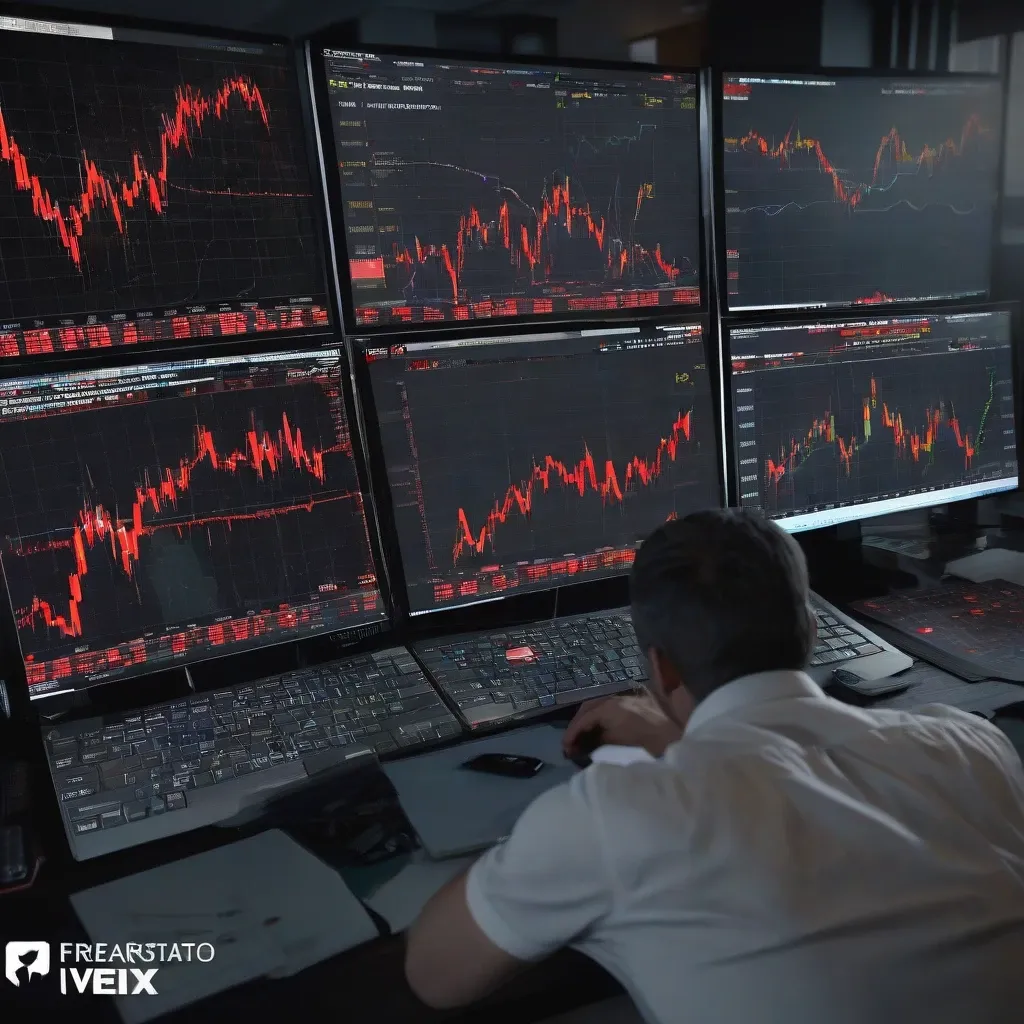
I remember a time when the market felt like it was personally conspiring against me. Trade after trade went south, a relentless losing streak that seemed to have no end. Doubts crept in, whispering insidious questions about my abilities and strategies. Sleep became a luxury as I obsessively analyzed charts and news, desperately seeking a way to reverse my fortunes. It was more than just money; it was a blow to my confidence, a test of my resolve. But it was in the depths of that losing streak that I forged the skills that define my approach today: rigorous risk management, unwavering psychological resilience, and the ability to strategically adapt to ever-changing market conditions. Losing streaks are an unavoidable part of the game, but they don’t have to be the end of it. How we navigate those tough times ultimately shapes our success.
Building a Fortress: Proactive Risk Management Strategies
Effective risk management is not merely a reactive measure to be deployed after losses occur; it’s a proactive shield built to protect capital and mitigate the impact of inevitable losing streaks. It’s about setting the rules of engagement before entering the battlefield. Building a robust risk management framework involves understanding your risk appetite, employing sound position sizing techniques, utilizing stop-loss orders effectively, and diversifying your portfolio.
Position Sizing: The Cornerstone of Risk Control
Position sizing is the bedrock of responsible risk management. It dictates how much capital you allocate to a single trade or investment, directly influencing the potential impact of losses and gains on your overall portfolio. The goal is to strike a balance between maximizing potential returns and minimizing the risk of ruin.
One approach involves assessing individual risk tolerance based on factors like experience, investment goals, and financial capacity. Once this is evaluated, a percentage of account size is determined for each trade. For example, with a $50,000 account and a risk tolerance of 1%, the maximum risk per trade would be $500. If a stock is trading at $50, and you set a stop-loss at $45, you could purchase 100 shares. ($5 risk x 100 shares = $500 total risk).
Stop-Loss Orders: Your Safety Net
Stop-loss orders act as an automated safety net, triggering a sale of an asset when it reaches a predetermined price level. This helps to limit potential losses in volatile market conditions. There are a couple of types of stop-loss orders: fixed and trailing. A fixed stop-loss is set at a specific price point and remains static, while a trailing stop-loss adjusts automatically as the asset price moves favorably, locking in profits and providing enhanced protection.
For instance, imagine buying a stock at $100 and setting a fixed stop-loss at $95. If the stock price drops to $95, the stop-loss order is triggered, and the shares are automatically sold, limiting your loss to $5 per share. Alternatively, a trailing stop-loss could be set at 10% below the current market price. If the stock rises to $120, the trailing stop would adjust to $108, providing downside protection while allowing you to participate in further upside potential.

Spotting the Storm: Recognizing the Early Warning Signs
No trader is immune to losing streaks. However, recognizing the subtle signs can make all the difference between a minor setback and a portfolio-crushing catastrophe. Paying attention to shifts in market behavior, tracking your strategy’s performance, and honestly assessing your emotional state are crucial for proactive risk management. Identifying these early warning signs allows you to adjust your approach, protect your capital, and weather the storm with greater resilience.
Market Indicators: Shifts in Volatility and Trend
Keep a close eye on the VIX, often called the “fear gauge,” which spikes during periods of increased market uncertainty. Increased trading volume accompanying a price reversal can signal a trend shift. Analyzing these metrics provides insights into the overall market sentiment and helps anticipate potential downturns. For instance, a sudden surge in the VIX alongside a significant drop in a major index could suggest an impending period of heightened volatility.
Performance Metrics: Monitor your metrics every week
Diligently track your trading performance using key metrics like Win Rate, Risk-Reward Ratio, and R-Multiple. A consistently high Win Rate is great, but a poor Risk-Reward may eat all your profits. R-Multiple measures your returns relative to your risk. Also pay attention with consecutive losing trades. I remember a time when I was on a great month but then I started having 4-5 consecutive loss trades due to overconfidence, but I didn’t pay attention and the black swan crushed my entire month in one day. Check this illustrative comparison:
| Metric | Healthy Range | Warning Sign |
|---|---|---|
| Win Rate | 50% – 70% | Below 40% |
| Risk-Reward Ratio | 1:2 or higher | Below 1:1 |
| R-Multiple | 2 or higher | Below 1 |
| Consecutive Losing Trades | 0-2 | 5 or more |
Psychological Pitfalls: Why We Make Mistakes During Losing Streaks
Losing streaks are brutal. They challenge your strategy, your confidence, and even your sanity. The market doesn’t care about your feelings, but your brain certainly does. Several psychological biases can hijack your decision-making process, turning a temporary setback into a portfolio-crushing disaster. Recognizing these pitfalls is the first step toward regaining control.
Loss Aversion: The Pain of Losing
Loss aversion is the tendency to feel the pain of a loss more strongly than the pleasure of an equivalent gain. This can lead to desperate attempts to avoid losses, like holding onto losing positions for too long or doubling down on bad bets. A solid trading plan is your best defence. Define your risk tolerancebefore* you enter a trade and stick to it, regardless of how youfeel*. Create clear trading rules and follow them, regardless of the losses. Don’t let fear drive your decisions. Cut your losses early, and remember that every trader experiences them. Think long-term gains.
Gambler’s Fallacy: The Power of Predictability
The gambler’s fallacy is the mistaken belief that if something happens more frequently than normal during a given period, it will happen less frequently in the future (or vice versa). Thinking that a series of lossesmust* mean a win is coming is a recipe for disaster in the market. To combat this, treat each trade as an independent event. Past performance does not guarantee future results. Stick to your trading plan, making adjustments based onmarket analysis*, not on wishful thinking. Maintain a routine and analyze deeply every investing or trading decision, do not let a biased mind to make your decisions.
Course Correction: Actionable Steps to Take During a Losing Streak
A losing streak can feel like an avalanche, where each subsequent loss accelerates the descent. The key is to recognize the pattern early and implement a plan to regain control. This isn’t about magically erasing losses, but about minimizing further damage and setting the stage for a future comeback. The following steps provide a structured approach to navigate this challenging period.
- Stop Trading Immediately: This is non-negotiable. Continuing to trade while emotionally compromised almost always leads to bigger losses. Take a complete break from the market – a day, a week, or even longer – until you regain emotional equilibrium.
- Reduce Position Size: Risk Control: A primary response to a losing streak should involve significantly reducing your trading size.
- Re-evaluate Strategy: Use the time away from active trading to thoroughly examine your strategy.
- Seek Feedback: Talk to other experienced traders or mentors. An outside perspective can often identify flaws in your approach that you may have overlooked.
Reduce Position Size: Risk Control
Imagine your account is rapidly depleting. Continuing to trade with the same position size after several losses is like pouring gasoline on a fire. The goal is to staunch the bleeding and protect your remaining capital. Consider halving your position size, or even reducing it to a quarter of its original size. This drastically lowers your potential losses on any single trade, giving you breathing room to reassess. For example, if you typically trade with 10 contracts, reduce this to 5 or even 2. This buys you time and reduces emotional stress, preventing further rash decisions born from a desire to quickly recoup losses. Protecting your account prevents it from being destroy, which is the main goal here.
Review Performance: Learning Form the Errors
Losing streaks offer invaluable learning opportunities, but only if you take the time to analyze what went wrong. Start by meticulously examining your trading journal entries. What patterns emerge? Were you consistently misreading market signals? Were you deviating from your pre-defined strategy? Quantify your performance using metrics like win rate, average win/loss ratio, and maximum drawdown. Journaling is fundamental for performance review. If you notice you’re consistently losing on a specific type of trade, that’s a clear signal to either modify your approach or avoid that setup altogether. Then, honestly assess the mistakes made. Did you move stop-loss orders out of fear? Did you chase entries after missing initial opportunities? Acknowledge these errors without self-recrimination, and formulate specific rules to prevent repeating them.
The Long Game: Cultivating a Resilient Mindset
Success in any field, especially in dynamic environments like trading and investing, hinges on your mental fortitude. It’s not just about the numbers; it’s about your ability to weather storms, learn from setbacks, and maintain a long-term perspective even when short-term results are unfavorable. I’ve learned that developing mental resilience is like building a muscle – it requires consistent effort, discipline, and a willingness to push through discomfort. One crucial element in this process is cultivating a healthy relationship with risk; understanding that losses are inevitable and viewing them as learning opportunities rather than personal failures.
Detachment: Emotion Avoid
One of the most effective techniques I’ve found for navigating emotionally charged situations is to actively cultivate detachment. This isn’t about becoming indifferent; it’s about training your mind to observe situations from a neutral perspective. When faced with a volatile market, practice focusing on objective data – the facts and figures – rather than getting caught up in the fear and hype. This creates space for rational decision-making and helps you avoid panic-driven reactions. Start by simply acknowledging your emotions without judgment. Say to yourself, “I am feeling anxious,” and then consciously shift your attention back to the objective data in front of you. With practice, this simple act can significantly reduce the intensity of your emotional response.
Visualize yourself winning:
Visualization is more than just wishful thinking; it’s a powerful tool for shaping your mindset and influencing your actions. When I face a critical investment decision, I take time to visualize the successful outcome in vivid detail. I imagine myself calmly analyzing the market, executing my trades with precision, and achieving my financial goals. The key is to engage all your senses – see the charts trending in your favor, feel the satisfaction of a well-executed trade, and hear the positive feedback from your colleagues. This mental rehearsal helps create a positive feedback loop in your brain, making you more confident and resilient when you face real-world challenges. Remember to stay objective, avoid emotional highs and lows in your visualization, and focus on the process rather than just the outcome.
Conclusion
Losing streaks can be frustrating, but they don’t have to define your journey. Success isn’t about avoiding setbacks; it’s about how you respond to them. Proactive risk management can cushion the blow, while psychological resilience helps you bounce back stronger. By adapting your strategies and maintaining a positive mindset, you can transform losing streaks into valuable learning experiences.
Embrace the challenge, implement these strategies, and remember that every setback is a setup for a comeback. Your next win is closer than you think.